Asbestos Abatement
Asbestos abatement is performed in environments where exposure control and regulatory compliance are critical.
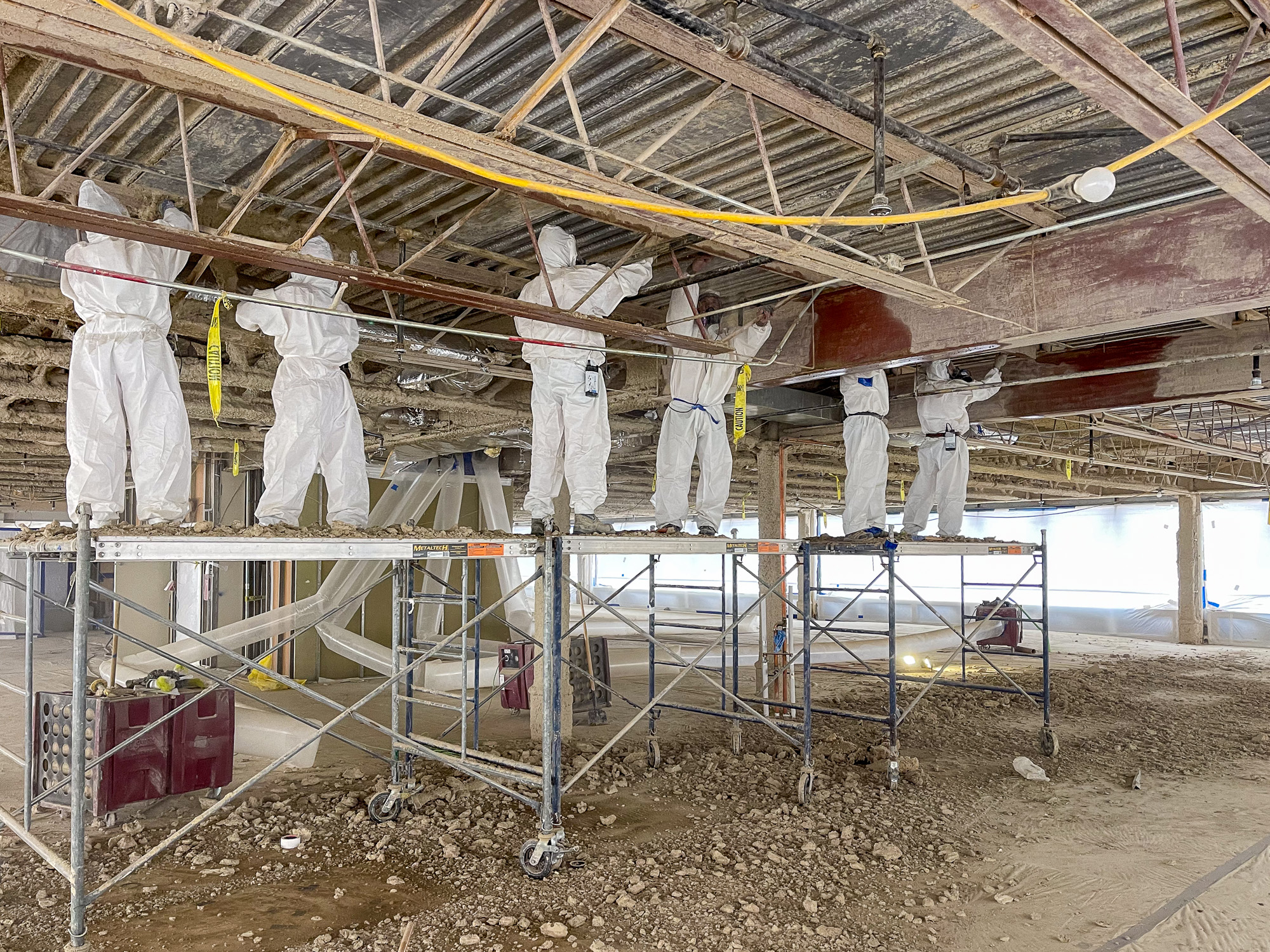
Asbestos abatement is performed in environments where exposure control and regulatory compliance are critical.
Asbestos abatement is performed in environments where exposure control and regulatory compliance are critical.
Typical settings include:
Commercial and industrial buildings
Schools and institutional facilities
Mechanical rooms and service shafts
Healthcare and sensitive environments
Marine vessels and shipyards

Materials, conditions, and occupancy status are evaluated to determine abatement class, controls, and regulatory requirements before work begins.
Abatement scope is classified as Type 1, Type 2, or Type 3 based on material condition, disturbance potential, and occupancy. Controls, containment, and procedures are established accordingly.
Containment zones, negative air pressure, access controls, and monitoring systems are established to prevent fibre migration beyond the work area.
Asbestos-containing materials are removed using approved methods and packaged, labelled, and transported in accordance with regulatory requirements.
Work areas and personnel pathways are decontaminated, visually inspected, and prepared for third-party clearance where required.
Waste manifests, air monitoring results, logs, and clearance documentation are compiled to support inspection, audit, and project close-out.
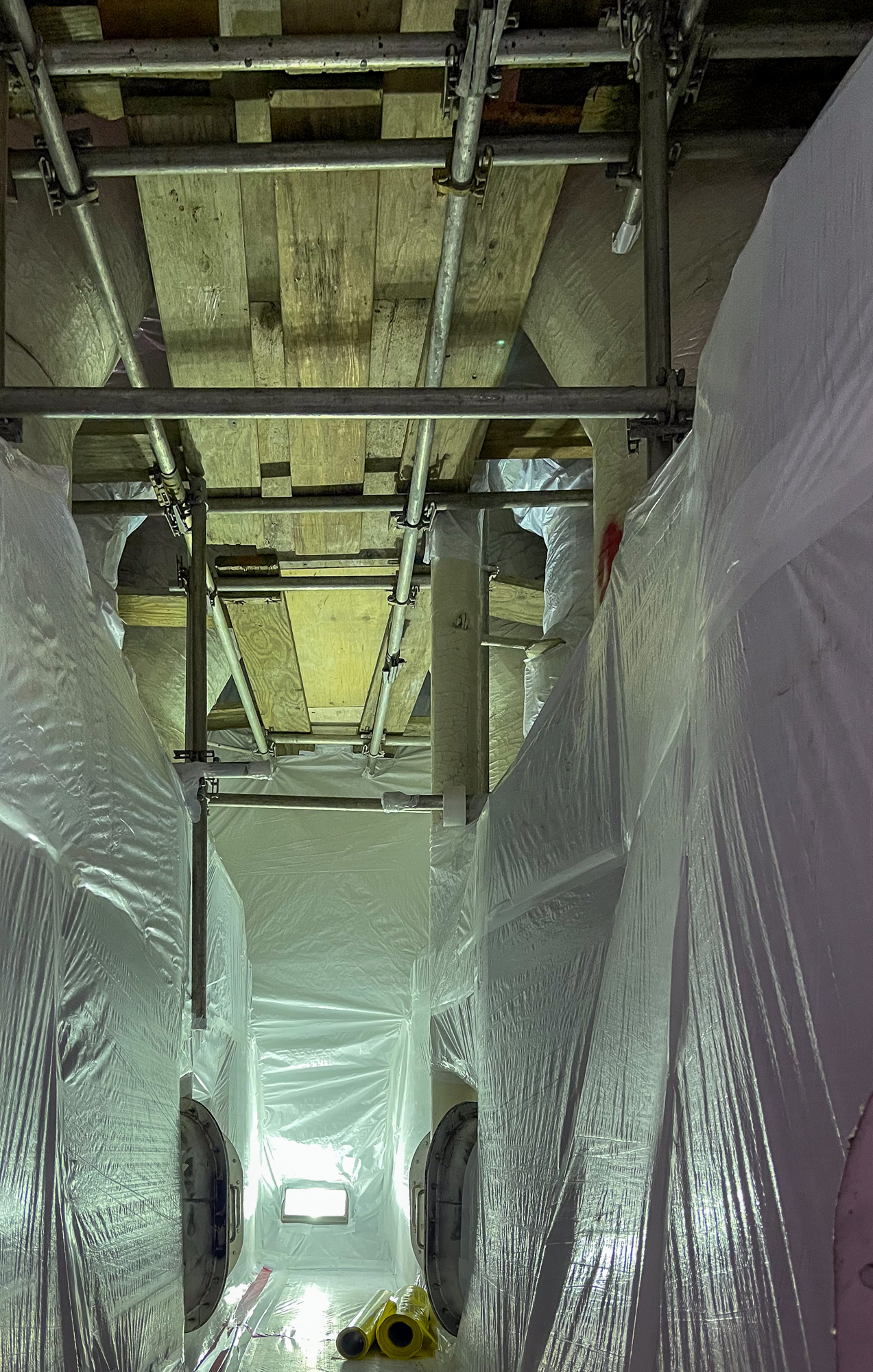
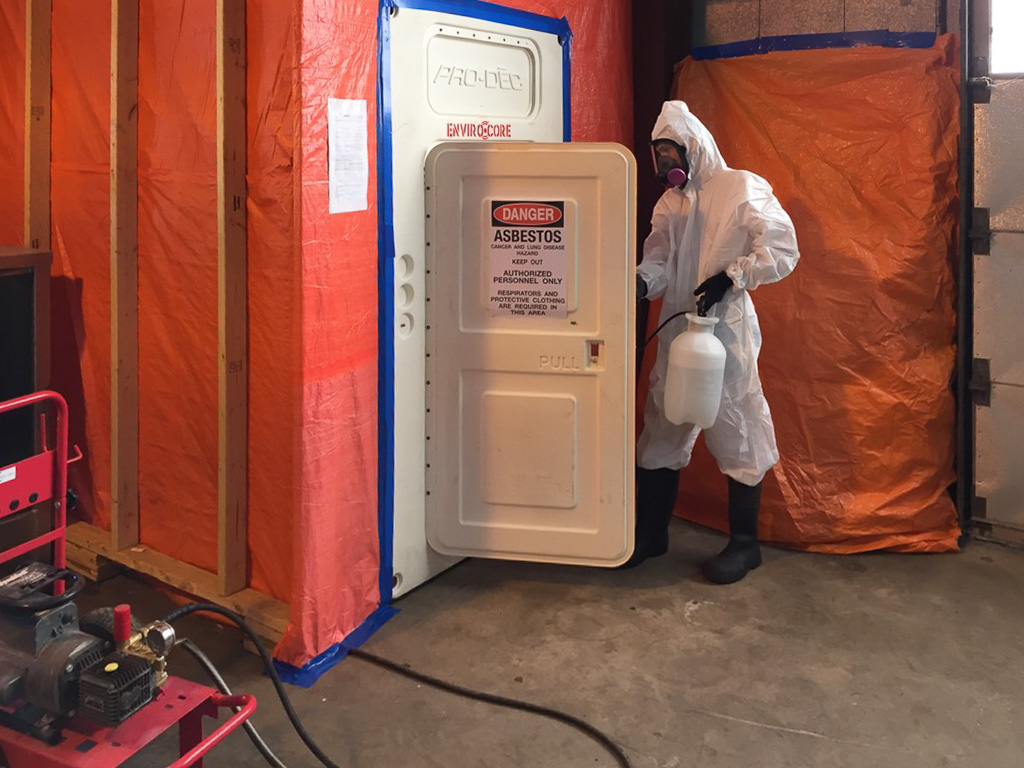
Asbestos abatement work is performed in accordance with OHSA 278/05 and site-specific safety requirements.
All work is completed by trained personnel and coordinated with consultants, building owners, and regulatory expectations. Documentation is maintained to support inspections, audits, and project close-out.All work is coordinated with facility safety programs and documented to support audits and inspections.
